I get asked about this all the time. People love their plants, but the mess around pots drives them mad. Soil creeps across floors. Water leaves cloudy patches. Leaves break into tiny crumbs that hide in corners. I spent years as a housemaid in London, and I saw this problem in every kind of home. From tiny studio flats in Camden to big townhouses in Kensington, the story stayed the same. The pots looked lovely. The floors around them did not.
I learned a lot by cleaning up after hundreds of plants. I also made my own mistakes. I once knocked over a tall fiddle-leaf fig while reaching behind a sofa in Shoreditch. The soil spread like a small avalanche. I stood there with my brush in shock. I cleaned it up, of course, but that moment taught me how messy a pot can be in a few seconds. This guide comes from years of picking up those grains of soil, lifting water rings, and coaxing floors back to life.
Let me walk you through clear steps that keep your home tidy without fuss. I’ll keep things simple and honest, just as I would if I were standing in your living room with my apron on.
Why Soil, Water, And Leaves Create So Much Mess
How Soil Travels Across Floors
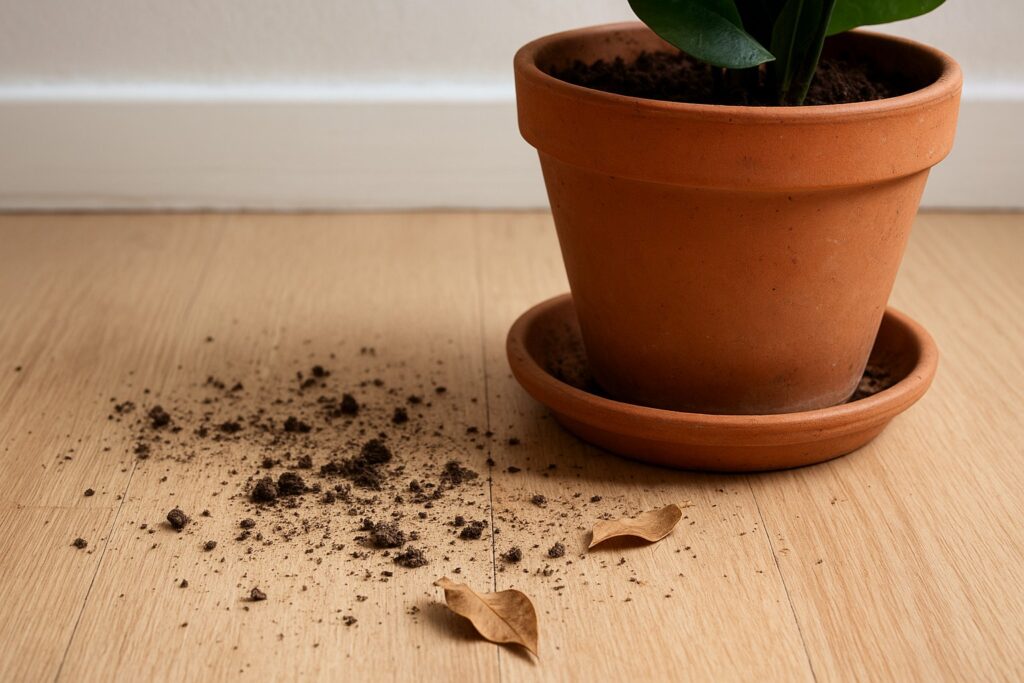
I noticed early in my career that soil spreads even when the pot looks steady. A plant doesn’t need to fall over to leave marks. Soil escapes during watering or when a pot sits on a slight angle. A tiny shake sends light bits of compost to the floor. A puff of air from a passing person can move it too.
I used to think I could catch every bit with a quick wipe, but soil loves edges. It rolls until it finds a skirting board or a chair leg, then it stays there. I soon learned to look for dark specks hiding in plain sight. That habit saved me hours.
Hidden Damp Patches Around Pots
Water works in secret. A pot might sit in a tray, but water sneaks past the sides. I saw this happen with porous trays and metal stands. The water runs down the back and settles on the floor. A homeowner might think everything is dry because the front looks fine. I once found a deep wet patch under a ceramic pot in a loft conversion near Angel. The pot had been there for months. The wooden floor had a pale halo that needed gentle care to fix.
Dry floors matter. Damp attracts dirt, and dirt sticks.
Fallen Leaves And The Dust They Bring
A leaf falls, and it looks harmless. A few days pass, and it turns into a crisp little curl. It breaks when you touch it. That brittle leaf becomes dust that spreads with the slightest movement. I cleaned many corners where a small pile of leaf crumbs sat mixed with general household dust. Plants shed. It’s natural. The mess that follows simply needs a bit of routine attention.
My Step-by-Step Method For Cleaning The Area Around Pots
Clearing The Space Without Disturbing The Plant
I always start by shifting the pot, even if it feels heavy. I keep my knees bent and my back straight. I slide the pot instead of lifting it, unless it has delicate roots or a loose top layer of soil. Many London homes have narrow rooms, so I learned to work in tight spaces. A gentle move is all you need.
I check the spot underneath right away. This area holds most of the marks. Dust collects there too. I once found a tiny mound of dog hair under a pot in Clapham. The owners had no idea it existed.
Sweeping And Wiping The Right Way
My brush is always the first tool I reach for. A small hand brush helps me keep control. I brush soil into a dustpan without dragging it over the floor. Dragging spreads marks. Short strokes work better.
A damp cloth comes next. I never use a soaking wet one. A light touch lifts remaining soil without smearing it. I stay patient here. Rushing causes streaks, and streaks are just another mess to clean.
Dealing With Water Rings And Stubborn Marks
I saw every type of water mark you can imagine. Pale circles on wood. Cloudy patches on tiles. Dark marks under terracotta. Water leaves clues about where it travelled. I wipe the spot with warm water first. A microfibre cloth works well because it traps grime instead of pushing it around.
If the mark stays, I dampen the cloth a bit more and give it another go. I keep the pressure light. Heavy pressure on a stain often makes it worse. The aim is to lift, not scrub.
How To Clean Different Floor Types Around Pots
Wood Floors
Wood hates moisture. I found that out in my early days when I cleaned for a couple in Islington who loved big tropical plants. The pots leaked often, and the oak floor kept getting dull. I learned to dry water right away. Quick action saves wood.
I wipe with a barely damp cloth, then follow with a dry one. A dab of mild soap on stubborn marks helps, but I only use a tiny amount. Too much liquid causes dull spots. I also check for grit under pots because it scratches wood when the pot moves.
Tiles
Tiles handle water better, but soil loves grout lines. Grout grabs dirt and holds it. I sometimes use an old toothbrush to lift grime from grout. I keep it simple, though. A quick scrub and a rinse do the job.
Tiles show streaks if they dry too slowly. I always finish with a dry cloth. It keeps the surface bright and clear.
Carpets
Carpet and soil are not friends. Soil hides in the fibres and spreads when you walk over it. I brush loose soil up before it sinks deeper. A suction-only vacuum works well for this, as a brush bar sometimes pushes soil further into the pile.
I once rescued a cream carpet in a flat in Dalston after the owner knocked over a big pot of compost. The trick was to collect the loose soil first. Then I blotted the damp patch with kitchen towel. A light clean with warm water came next. The carpet looked new again.
Keeping Pots, Trays, And Stands Clean
How To Freshen Plastic Trays
Plastic trays stain easily. Water sits there and dries into pale marks. I wash them with warm water and a drop of washing-up liquid. A soft sponge does the trick. Hard scrubbing creates scratches that collect more dirt later.
I dry trays well before putting them back. A wet tray under a pot makes new marks fast.
Scrubbing Terracotta Without Damaging It
Terracotta is a stubborn material. It looks lovely but loves to soak up moisture. The white film you see on terracotta comes from mineral build-up. I scrub it with a soft brush and warm water. A gentle scrub lifts the film without harming the surface.
I let terracotta dry fully before placing it back on its stand. Damp terracotta on wood or metal creates marks.
Metal And Ceramic Pot Care
Metal pots leave rust rings if they sit in water. I wipe the base often, even if the pot looks clean. Ceramic holds soil dust in tiny grooves in the glaze. A soft cloth and warm water clear most of it. I polish ceramic gently to bring back the shine.
Smart Habits That Keep The Area Clean Longer
Using Mats, Risers, And Coasters
I discovered years ago that a small coaster under a pot saves hours of cleaning. I worked in a Chelsea home where a new oak floor had a pot near the window. The owner worried about marks. I placed a small cork coaster under the pot. That tiny choice kept the floor perfect.
Mats and risers also help. They catch soil and water before it hits the floor. I pick ones that match the room so they look like part of the home.
Water Control Tricks
A tidy plant area starts with good watering habits. I water slowly. A slow pour stops water from jumping over the rim. I also use trays that fit well. Loose trays spill more than tight ones.
I check trays for water after a few minutes and empty any extra. Standing water attracts grime.
Fast Daily Touch-ups
A quick daily check makes life easier. I give the area a light brush and a fast wipe. This takes less than a minute. I learned this habit during my busy days as a housemaid. A few seconds now saves a lot of time later.
I also turn the pot slightly each week. A small turn keeps the floor from wearing in one place.